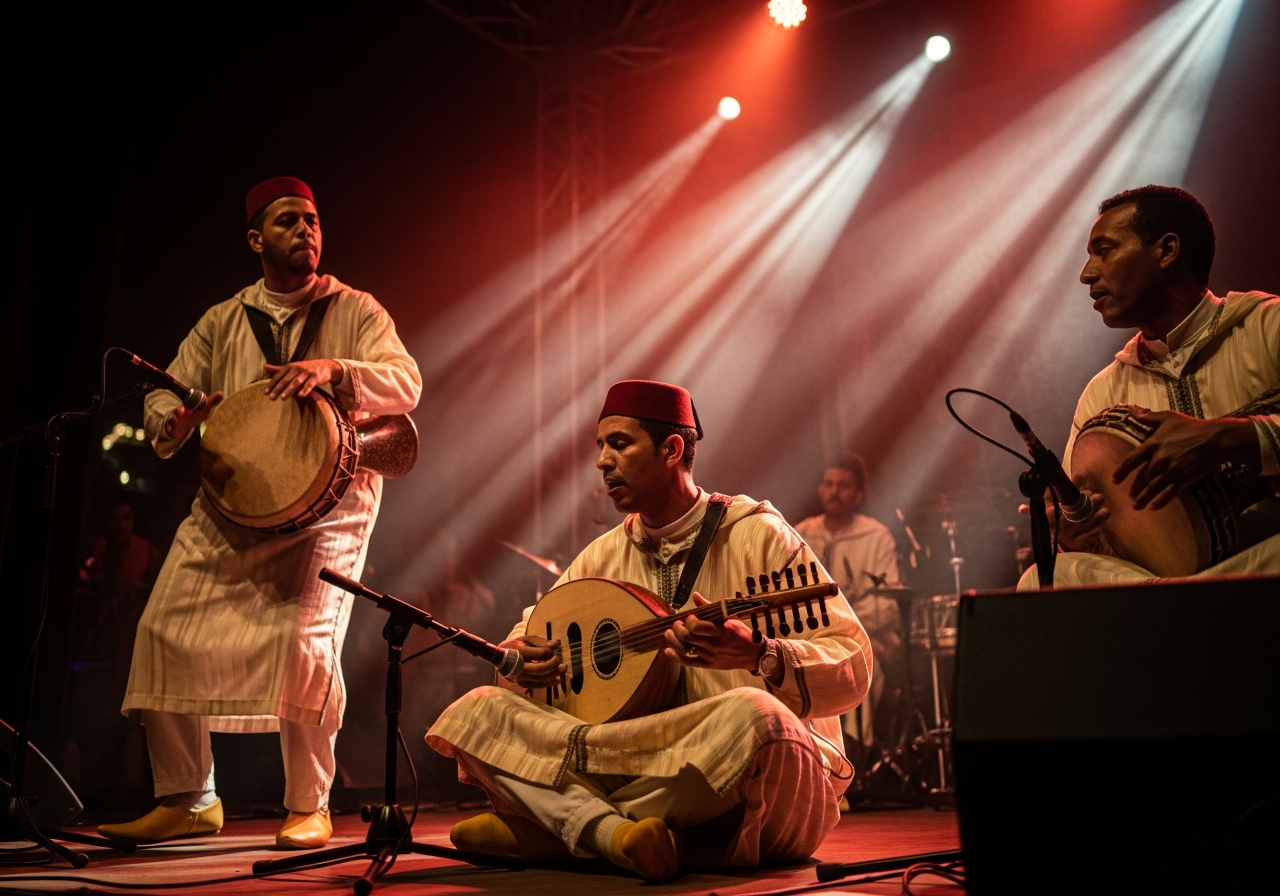
Founded in 1970, this revolutionary Casablanca band fused Gnawa, Sufi, and folk traditions to create a new Moroccan musical identity. Martin Scorsese called them 'The Rolling Stones of Africa'.
Nass El Ghiwane (literally "People of the Song") is the most influential Moroccan band in history. Founded in 1970 in Casablanca by members of an avant-garde theatre troupe, they revolutionized North African music and helped forge a post-colonial Moroccan identity.
**Musical Revolution:**
The band fused marginalized genres — Gnawa trance, Aita folk, Malhoun poetry, and Sufi traditions — to create something entirely new. They sang in Moroccan darija and Amazigh, rejecting the Egyptian tarab style that dominated Arabic music. Their lyrics drew from the 16th-century Sufi poet Abderrahman El Majdoub and addressed social issues with veiled political critique.
**Cultural Impact:**
During the "Years of Lead" under King Hassan II's regime, their music became the sound of protest for Moroccan youth. Filmmaker Martin Scorsese called them "the Rolling Stones of North Africa" and used their song "Ya Sah" in "The Last Temptation of Christ" (1988).
**Legacy:**
They influenced Algerian Raï — Cheb Khaled started by covering their songs. Contemporary Moroccan hip-hop artists call themselves "their children." The band remains active, playing sold-out concerts in Paris in 2024.