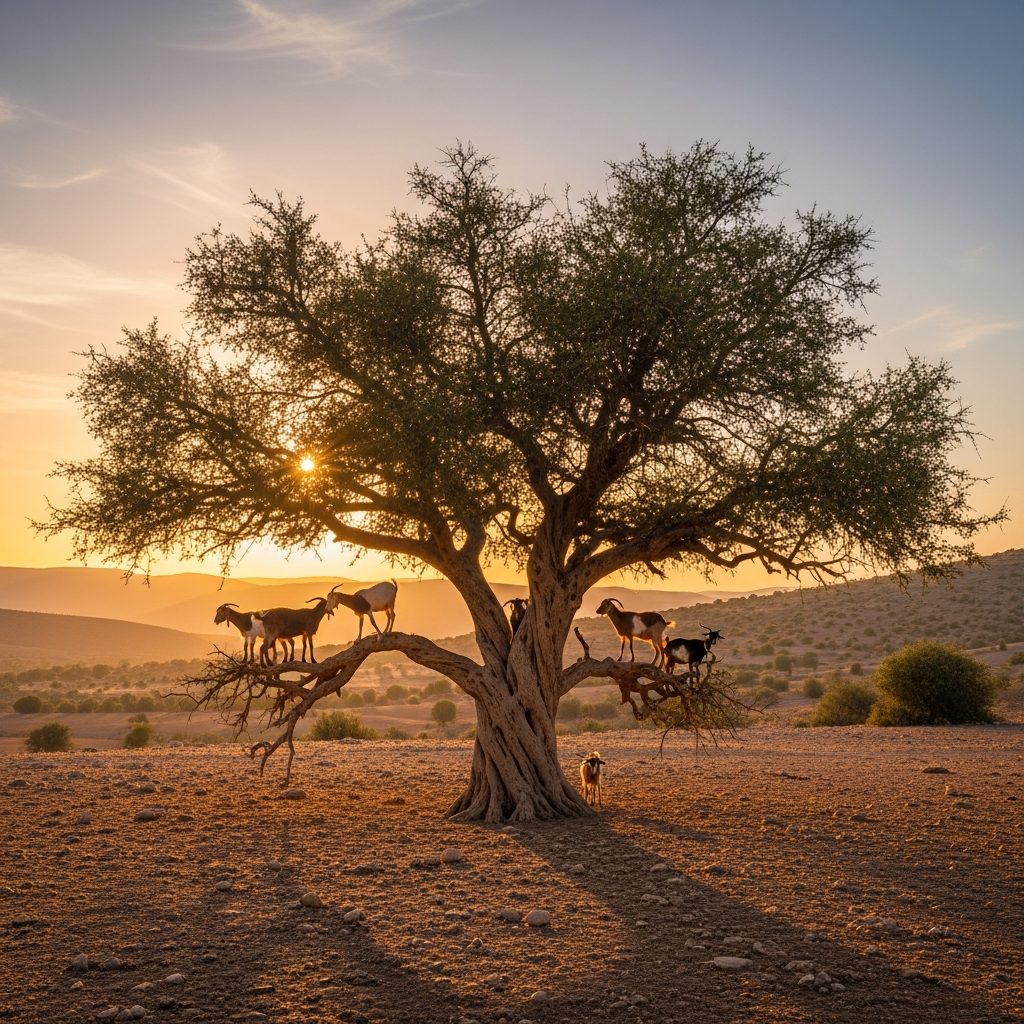
Argan oil, derived from the endemic argan tree of Morocco, has been used for centuries for culinary, medicinal, and cosmetic purposes. UNESCO recognized it as Intangible Cultural Heritage in 2014.
Argan oil, often referred to as "liquid gold," is produced from the kernels of the argan tree (Argania spinosa), which is endemic to the semi-desert Souss valley of southwestern Morocco. For centuries, Amazigh (Berber) women have extracted this oil for culinary, cosmetic, and medicinal purposes.
The production of argan oil is a labor-intensive process that has traditionally been the domain of women. In recent decades, the formation of women's cooperatives has transformed this tradition into a mechanism for socioeconomic empowerment, providing income and education for rural women.
In 2014, UNESCO added the "Argan, practices and know-how concerning the argan tree" to the Representative List of the Intangible Cultural Heritage of Humanity. Furthermore, the Arganeraie Biosphere Reserve is recognized for its ecological importance in preventing desertification. The oil is prized globally for its nutritive value and anti-aging properties, becoming a staple in high-end cosmetics and gourmet cuisine.